MUST-SEE

ANCIENT

HERITAGE
The Whitewashed Labyrinth of Lindos
Lindos Village – Rhodes’ Little Santorini
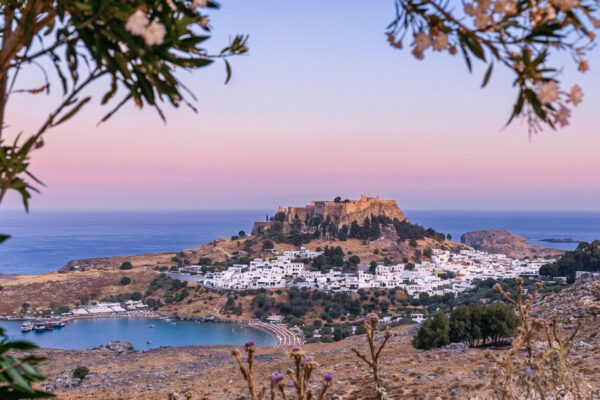
Lindos village is one of Rhodes’ top attractions! Out of the three ancient city-states, it is the only one that has survived to this day. Daily, thousands of travelers visit Lindos to wander through its picturesque streets, to see the Archaeological site – the Acropolis, or to spend a day swimming and sunbathing on its sandy beaches.
Lindos is situated at a distance of approx. 50 km (31 miles) from the capital and occupies the same place as the ancient homonymous city. The village is reminiscent of the old medieval settlements in the Aegean. The houses are built very close to one another, with courtyards located within the interior, a feature that provides protection. The actual form of the settlement was established after the strong earthquake of 1610. The village was reconstructed and decorated with new buildings at the expense of the wealthy local ship owners. The most representative mansions date to the 17th and 18th centuries and are known by the names of their owners: the Houses of Papakonstantis, Kyriakos, Makris, Krikis, Marietta Markoulitsa, and Ioanidis. Today, the majority of the village’s 800 permanent residents are employed in tourism.

Captain’s Mansions’ gateways where horses used to pass through

A charming Lindian house
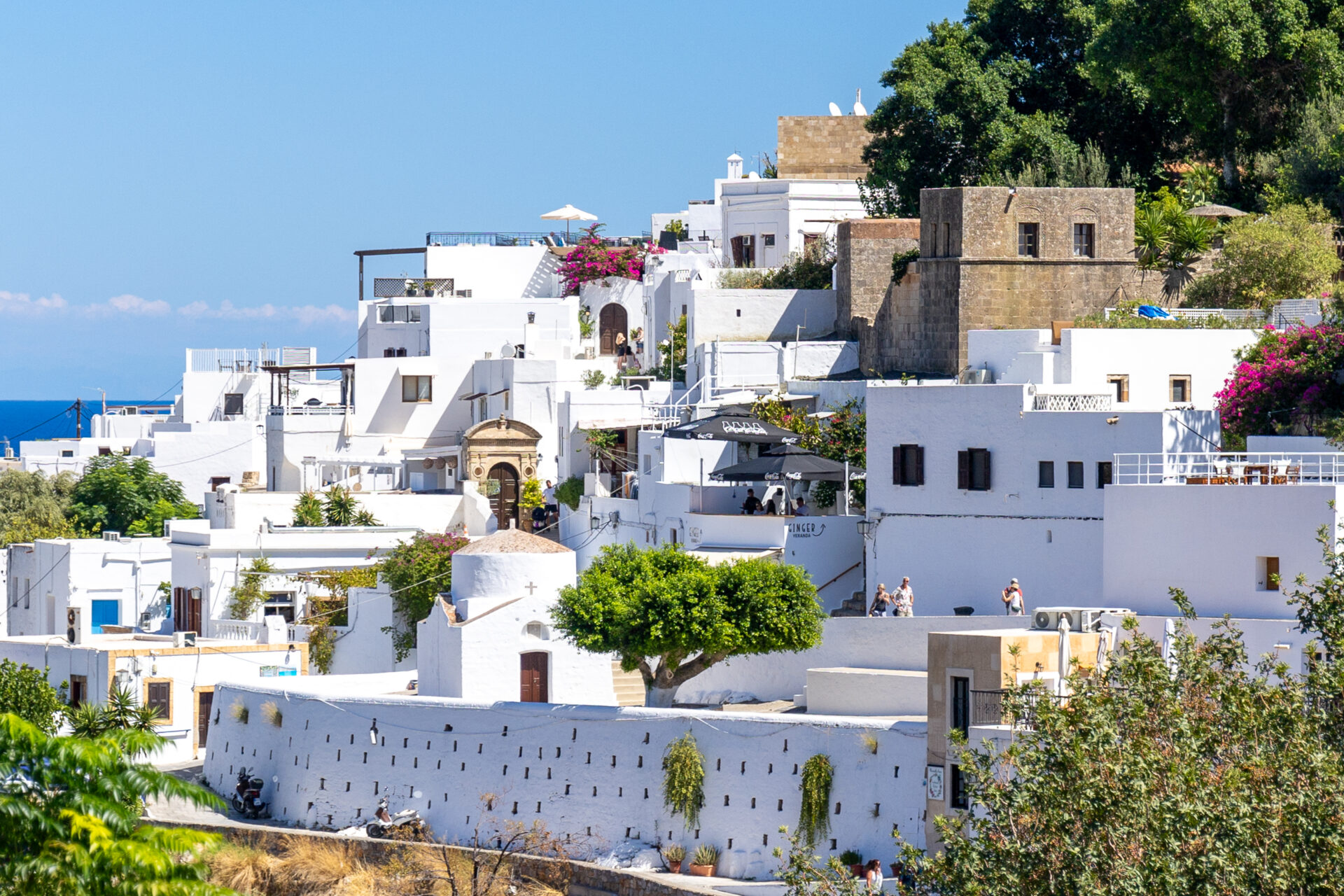
It’s an ideal location for carefree strolls with a cosmopolitan summer atmosphere, vibrant narrow, labyrinthine streets, white-washed houses, religious monuments, cozy rooftop gardens with restaurants & cafes, stylish boutiques and mainstream souvenir shops, all side by side.
But where should you start, and what is the best way to explore Lindos? Let us guide you through the village with a few helpful tips, so you can discover the places, views, and experiences that interest you the most — and know exactly where to find them.
A Greeting from Cleobulus
Upon arriving in Lindos, opposite the main bus parking area at Krana Square, you will notice the statue of an ancient figure overlooking the visitors. This is Cleobulus, the famous ruler — or “tyrant” — of Lindos and one of the legendary Seven Sages of ancient Greece who lived during the 6th century BC.
Born in Lindos, Cleobulus was admired for his strength, charm, and above all, his wisdom. Ancient sources also credit him with rebuilding the Temple of Athena on the Acropolis of Lindos. His tomb is believed to be located on the opposite side of Lindos rock, overlooking the sea. An ancient inscription dedicated to him reads:
“Here the wise Rhodian, Cleobulus, sleeps, And o’er his ashes sea-proud Lindos weeps.”

Cleobulus – one of the Seven Sages of ancient Greece
Into the Lindos “Labyrinth”
And here you go — after an easy 5-minute walk downhill, you will arrive at the main square of Lindos. This lively little roundabout connects the village, the Acropolis, the main beach, and Saint Paul’s Bay, making it the perfect starting point for your exploration.
The square is easy to recognize thanks to the impressive plane tree standing in the middle of the roundabout, offering welcome shade during the warm summer days. Here you will also find the tourist information office, public toilets, a taxi rank, the shuttle bus stop, and a small fountain with fresh drinking water.
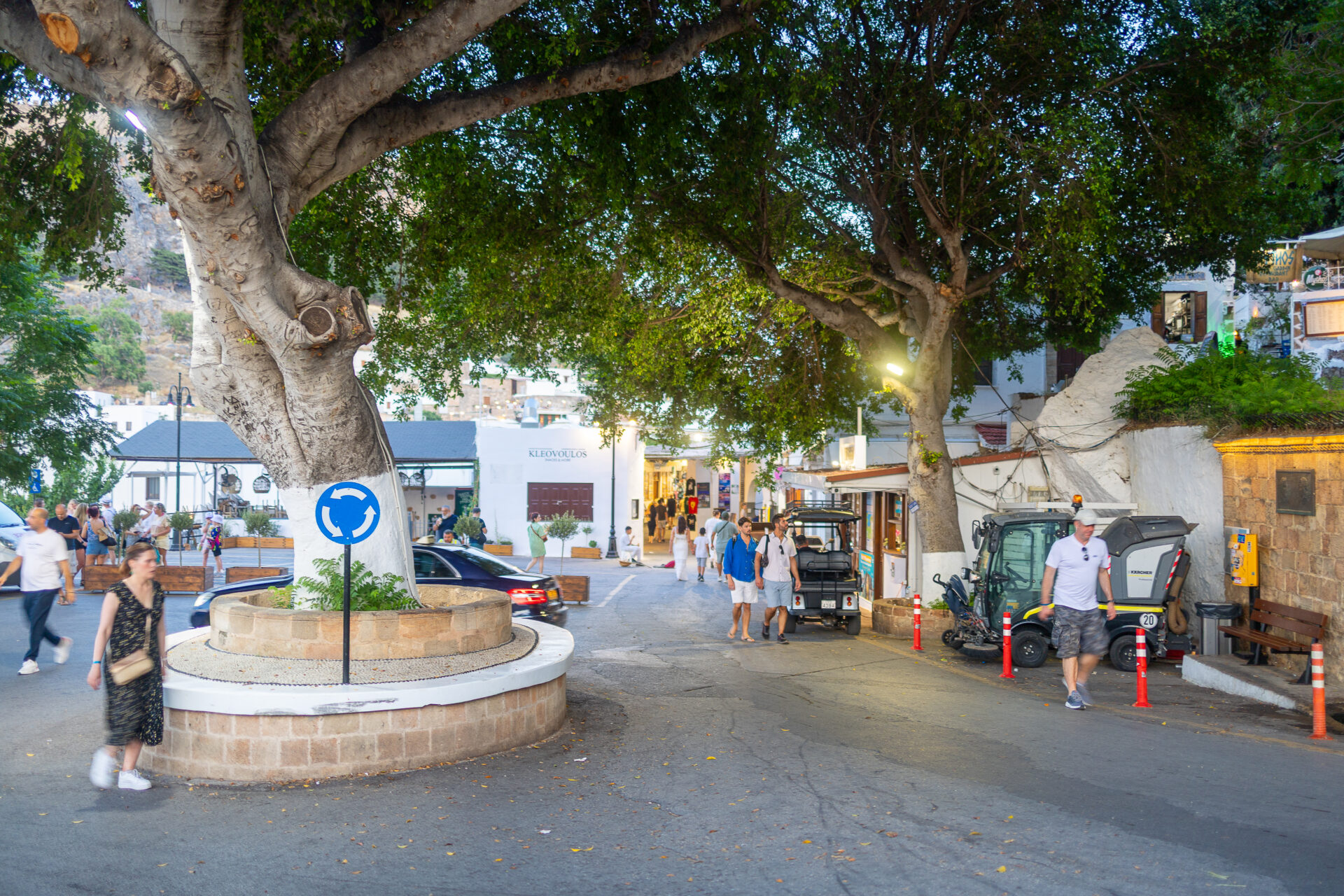
Lindos Main Square – easily recognized by the impressive Plane tree
From here, your Lindos adventure can truly begin!
Need some water? Refill your bottle with fresh spring water from the small fountain at the main square of Lindos. The water is cool, fresh, and perfectly drinkable — especially refreshing on a warm summer day!
As you wander through Lindos, you will notice the village is filled with charming white cube-shaped houses known as “Kamarika.” These traditional Lindian homes were usually simple single-room houses or courtyard-style homes hidden behind high walls and beautiful arched entrances.
Between them stand the taller and more impressive two- or three-storey mansions known as “Kapetaneika” — the historic homes of wealthy sea captains and ship owners who prospered in the 16th, 17th, and 18th centuries. These elegant houses reflected the success of Lindos during its important maritime trading era.
Today, many of these traditional buildings have been carefully transformed into restaurants, boutique shops, souvenir stores, and beautiful luxury accommodations. While exploring the narrow streets, take time to notice the small details that make Lindos so special — ornate arched doorways, traditional pebble mosaic courtyards, rustic doorbells, and hidden passageways full of character.
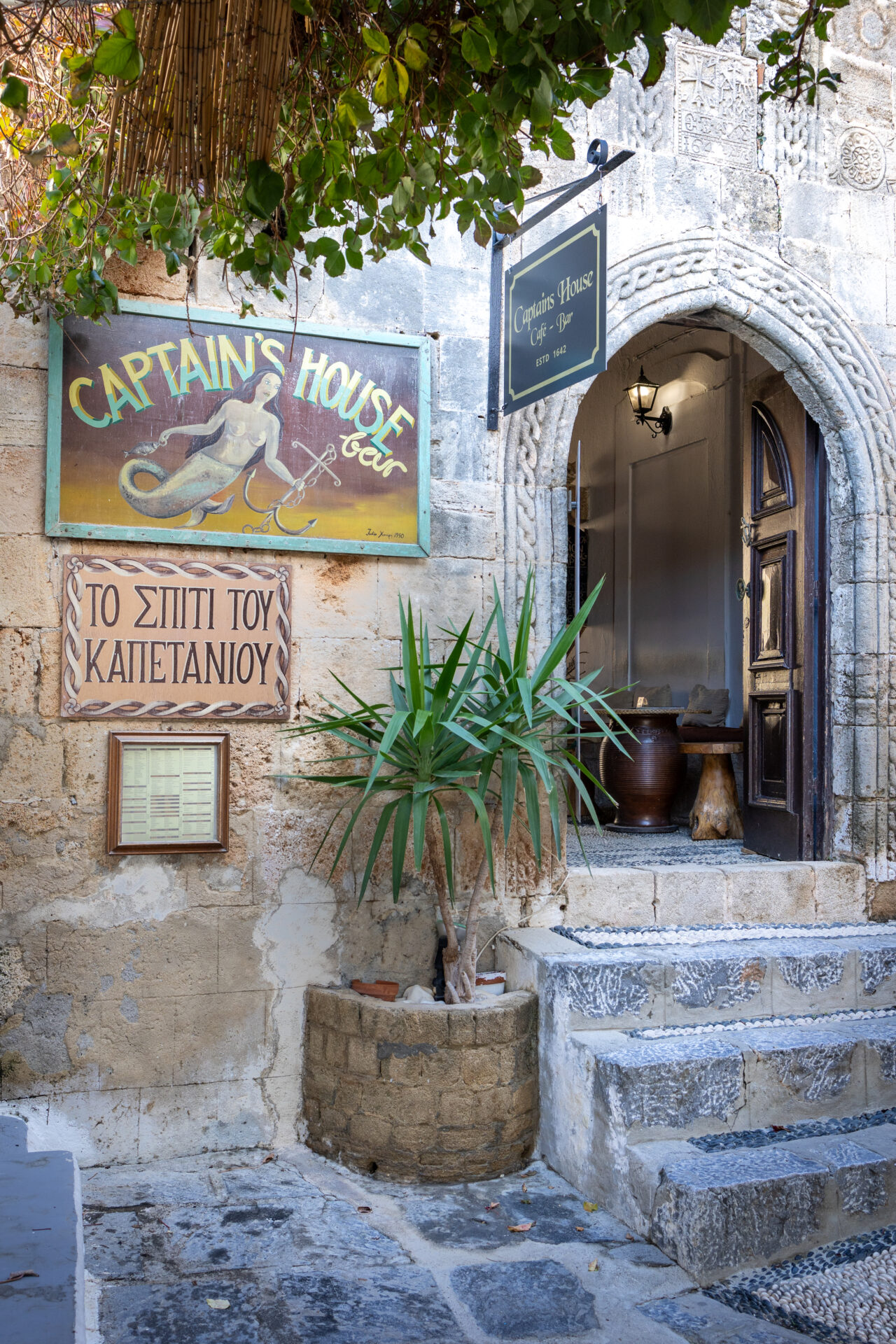
One of the most emblematic “Kapetaneika” today hosts a snack bar, allowing visitors to admire this beautiful captain’s mansion
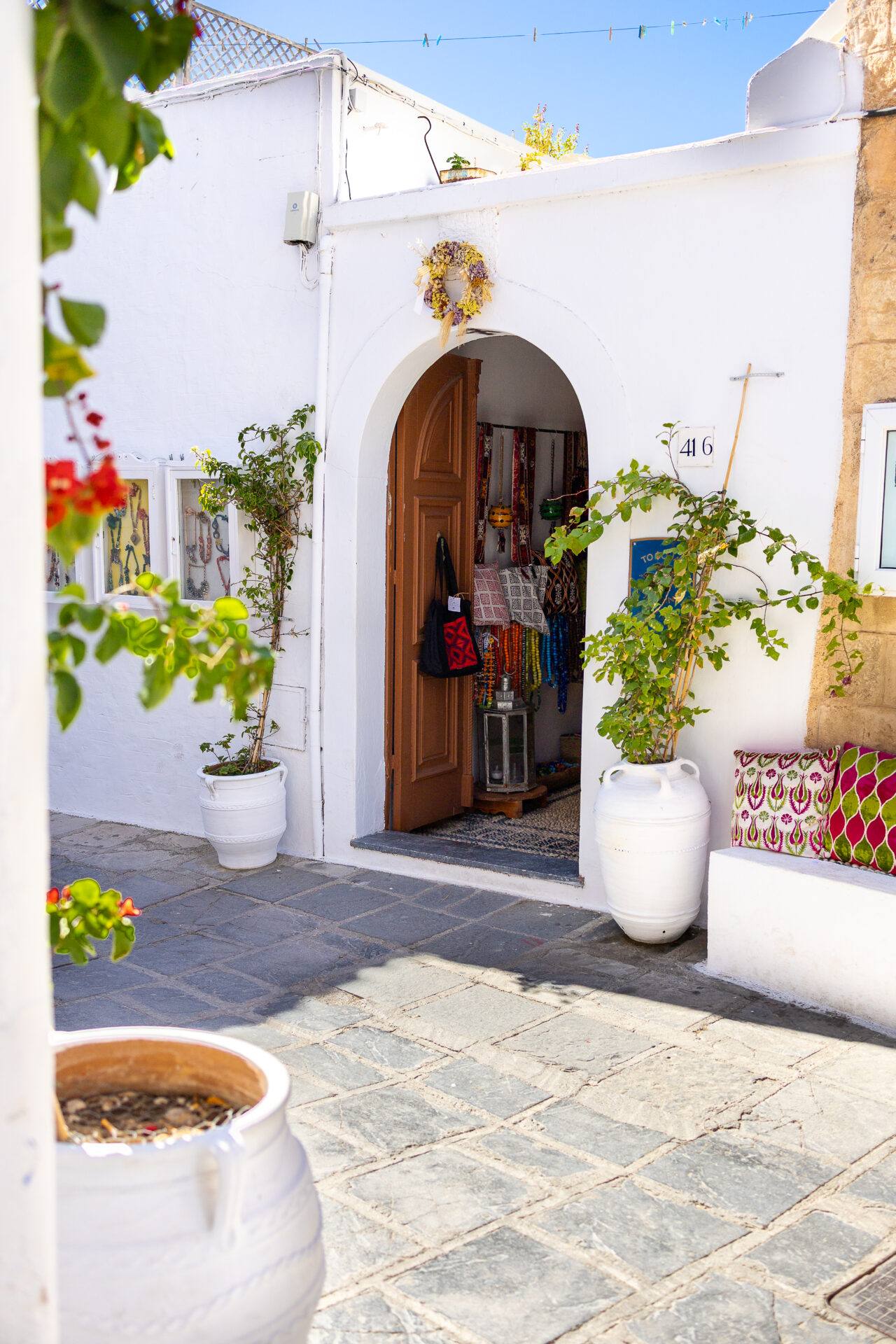
A typical Lindian “Kamarika” house in Lindos, open to explore and shop for rare handmade products, local crafts, and unique antiques
Church of the Assumption
History lovers visiting Lindos should not miss one of the island’s most important churches — the Church of the Assumption of the Virgin Mary, also known as the Church of the Dormition of the Virgin Mary. Although its exact origins remain uncertain, the church is believed to date back to the late Byzantine period.
In 1489, Grand Master Pierre d’Aubusson sponsored major restoration works, rebuilding the older church and adding the elegant groin-vaulted vestibule. Even today, visitors can still spot the Grand Master’s coat of arms on the southern side of the bell tower.
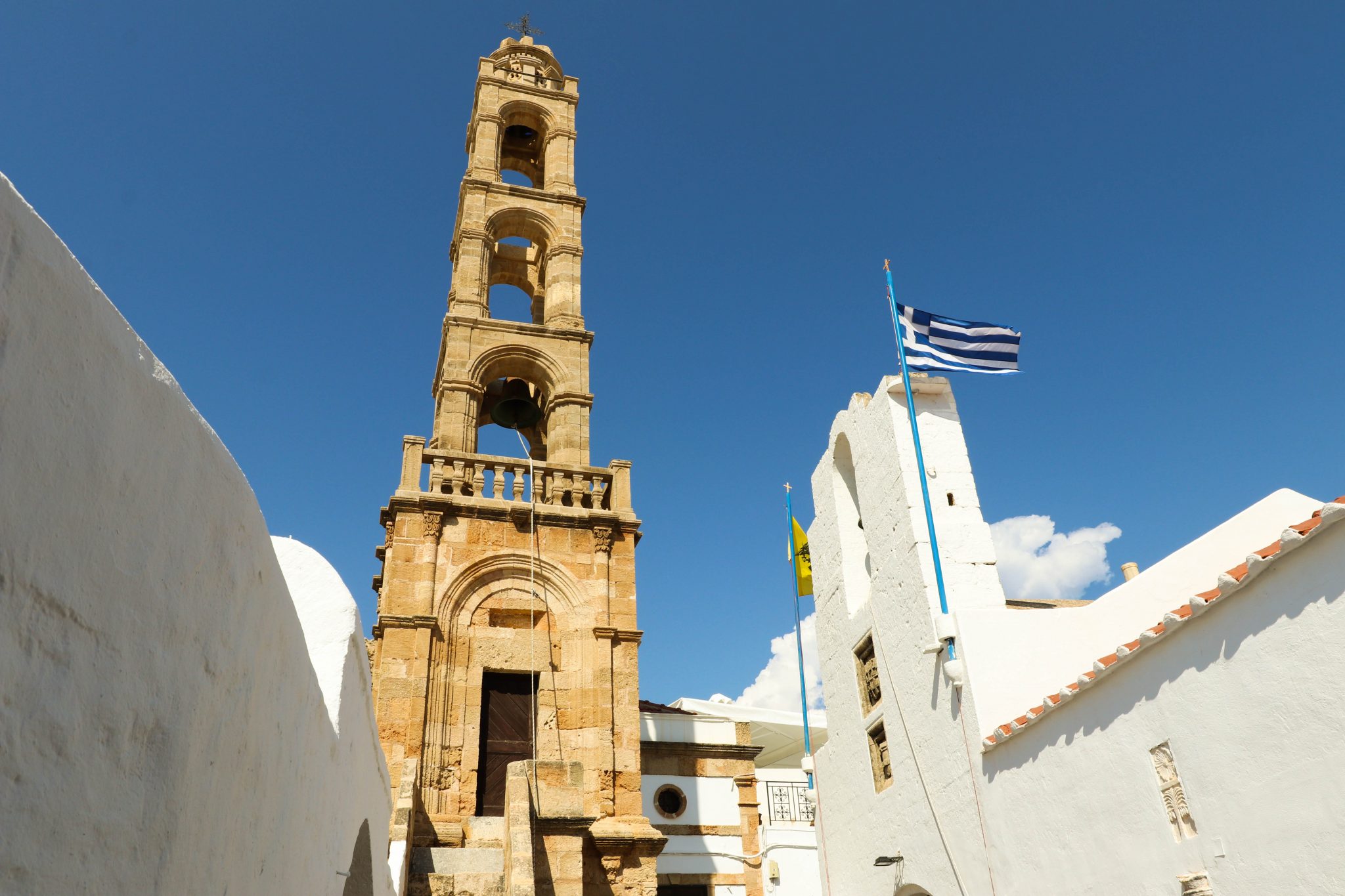
The Church of the Assumption of the Virgin Mary is easy to spot thanks to its distinctive bell tower
Some of the original frescoes have survived through the centuries, but most of the church’s beautiful interior paintings were created in 1779 by Gregorios of Symi, who covered nearly the entire church with colorful frescoes.
Among the most fascinating and unusual images is the depiction of Saint Christopher the Cynocephalus. Instead of the familiar gentle saint carrying Christ, he appears here as a powerful Roman soldier with a human body and the head of a dog — one of the rarest and most intriguing examples of Byzantine iconography still preserved in Greece.
Do not miss the Ecclesiastical Museum inside the church. It is situated next to the north arm of the cross. You will discover a sample of this religious center’s former wealth!
Acropolis – the highest point of the City
Of course, the main highlight of Lindos is its Acropolis — the impressive Acropolis of Lindos rising high above the village. This is one of the most important archaeological sites on Rhodes and is on almost every visitor’s must-see list.
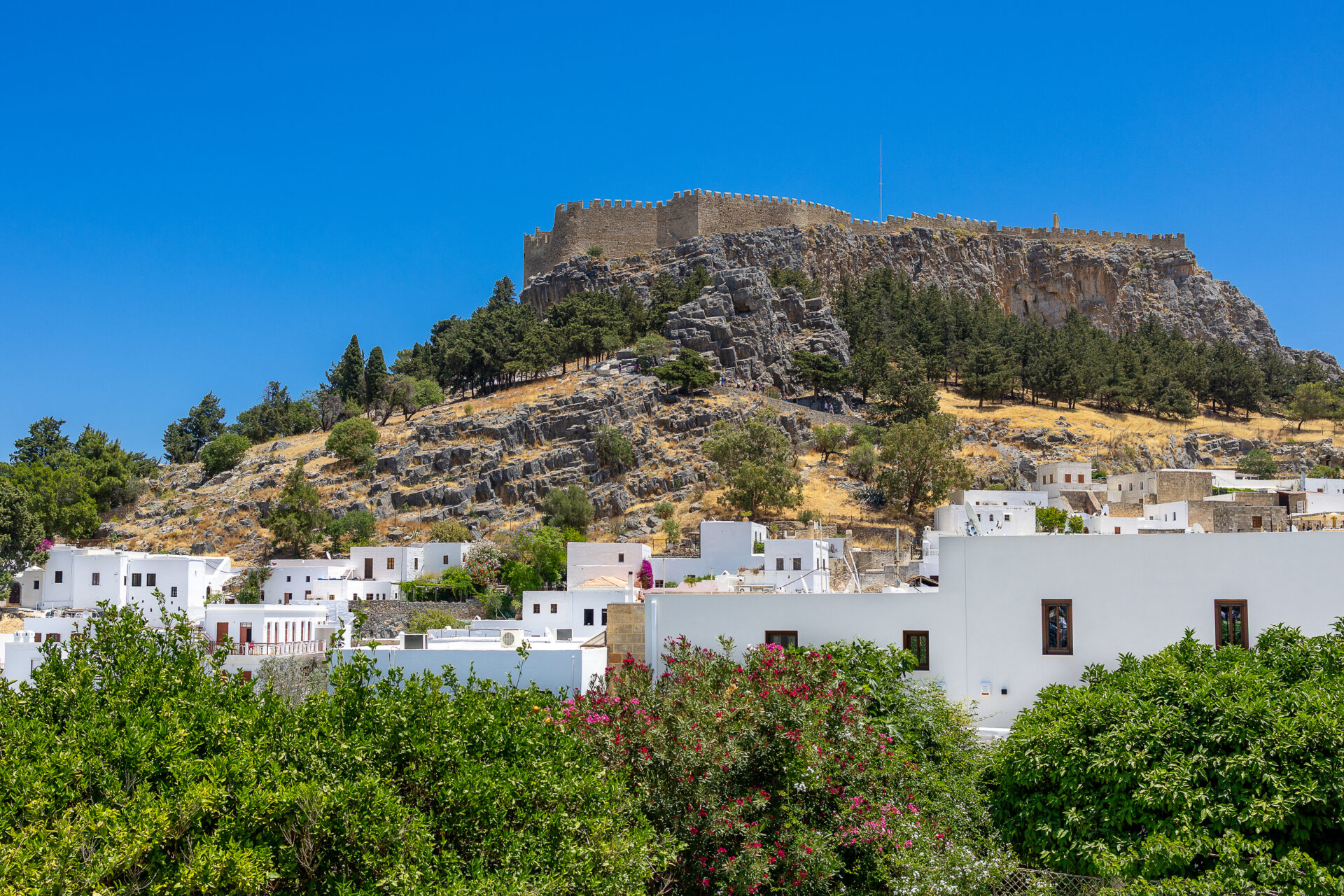
Almost every ancient Greek city had its own acropolis — a settlement built on the upper part of the city
The Acropolis deserves its own article, so we have prepared a mini-guide to help you explore it in more detail and discover everything you need to know before your visit. See here: Acropolis of Lindos.
Exploring further
There is still more to discover in Lindos. Walking towards the southwestern side of the hill, just below the Acropolis of Lindos and the Temple of Athena, you will find the ancient theater.
Carved directly into the natural rock of the hillside, the site remains remarkably well preserved. The seating area (koilon) and the circular orchestra are still clearly visible today, giving a real sense of how the space once functioned.
The theater is believed to have had a capacity of more than 1,800 spectators, with around 26 rows of seats — a clear sign of the importance of cultural and public life in ancient Lindos
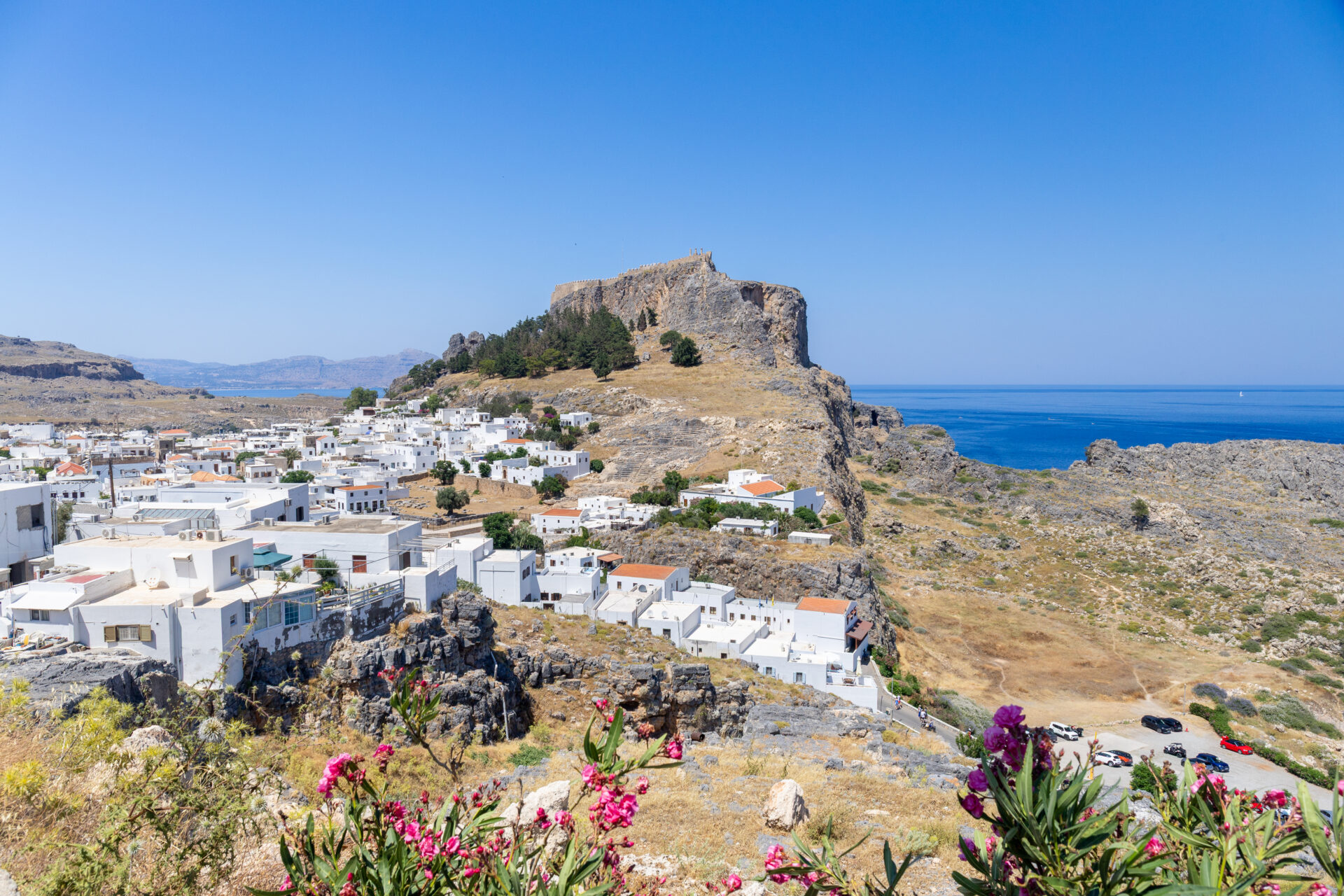
The back side of Lindos, with the ancient theater resting at the foot of the Acropolis rock
Once you pass the ancient theater, continue along the path and you will soon reach the famous Saint Paul’s Bay, known for its crystal-clear turquoise waters. According to tradition, this is the very spot where the Apostle Saint Paul is believed to have landed in 57 AD during his travels.
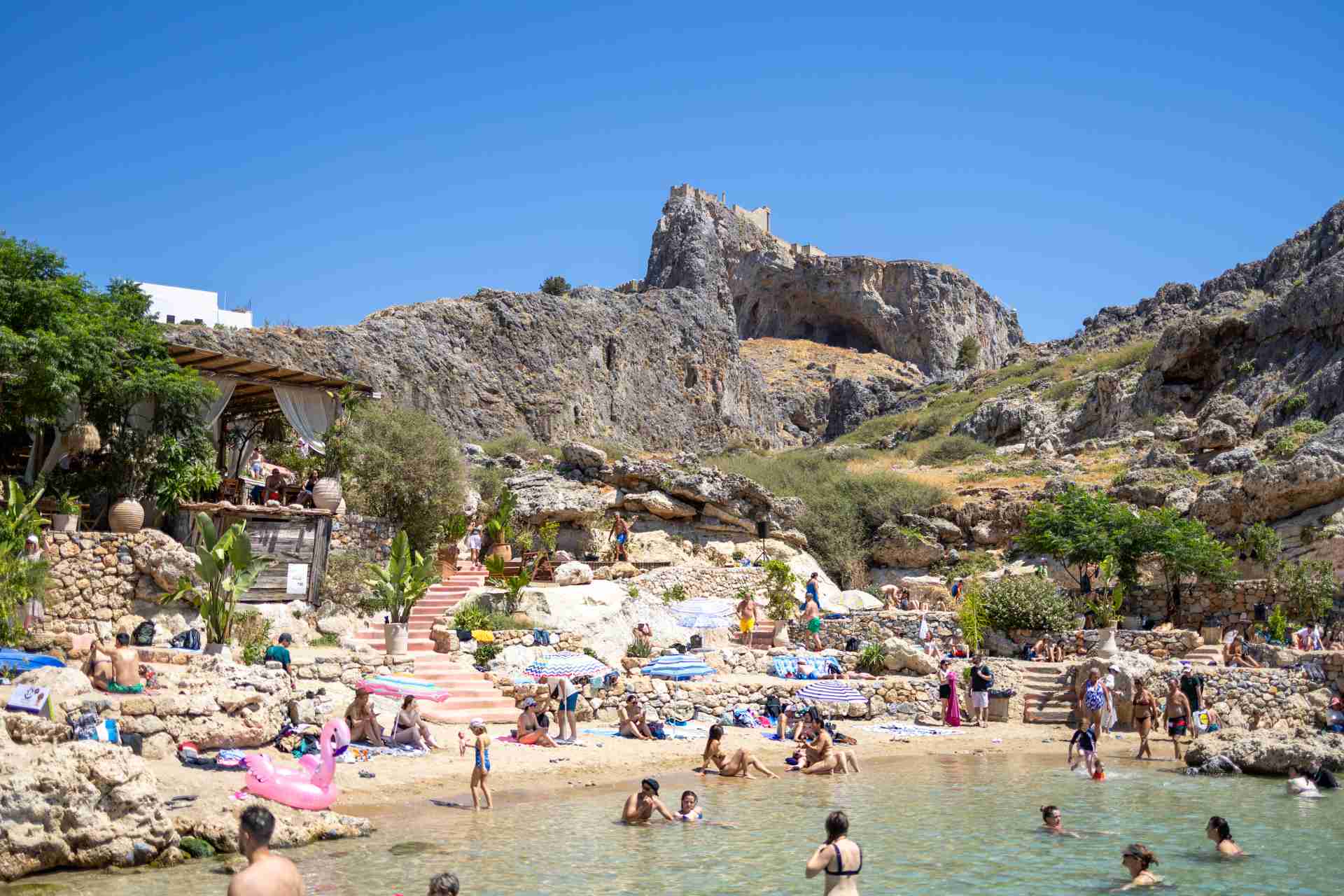
The Pink Beach at St. Paul’s Bay
At the end of the bay, just before the rocky edge, and almost hidden behind tall trees, you will find the small whitewashed church of Saint Paul.
Today, Saint Paul’s Bay is considered one of the most exclusive beach spots on Rhodes, offering luxury sunbeds, a diving center, the Pink Beach, and the well-known seaside restaurant Tambakio, all set against its stunning turquoise waters.
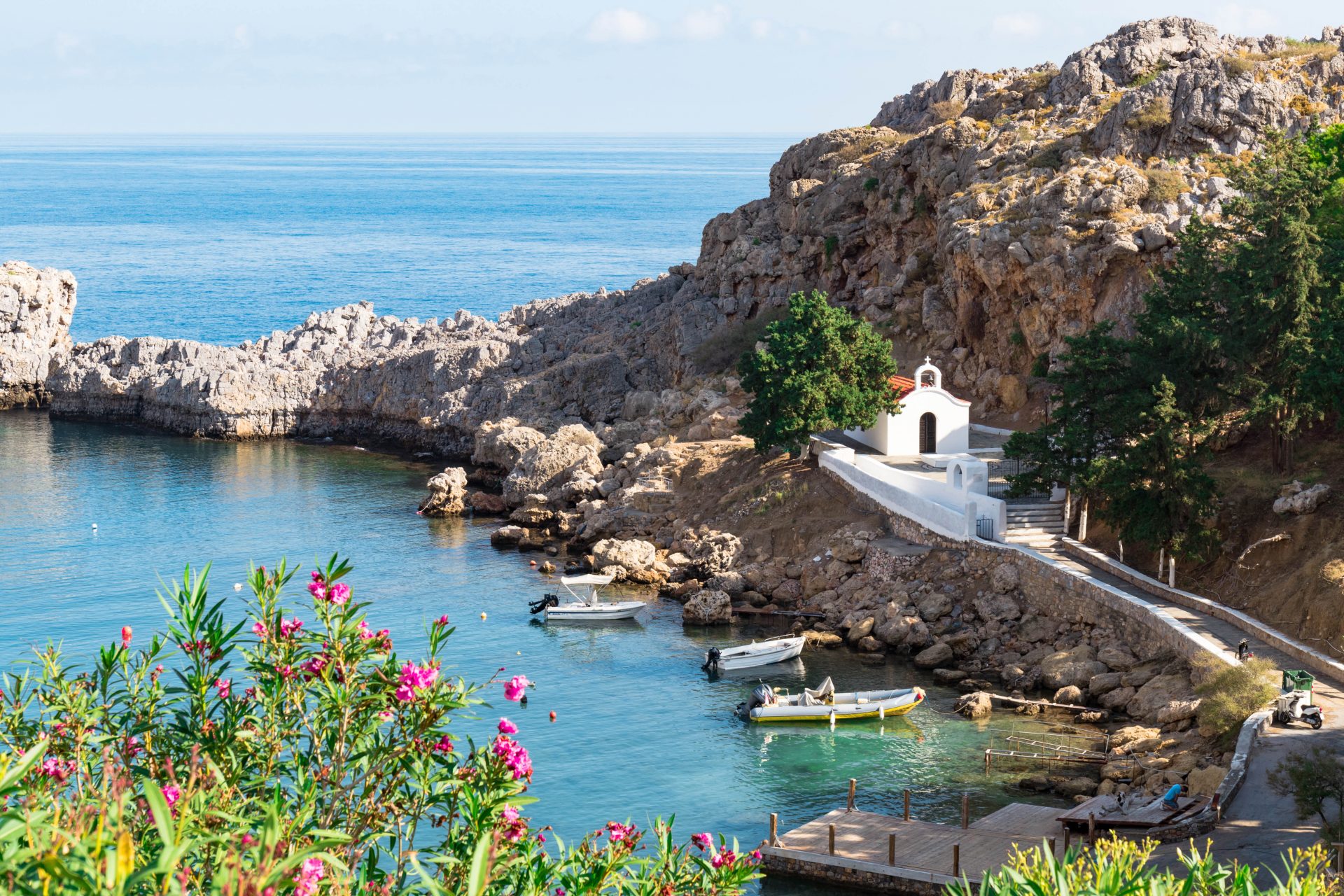
The small whitewashed church of Saint Paul
Lindos is not just a village to visit, but a place to experience — where history, heritage, traditions, beauty, sea, and everyday life blend together in a way you will remember long after you leave.